Palmer Amaranth (Amaranthus palmeri)

WHY IT’S IMPORTANT

Palmer amaranth is rapidly spreading throughout North America and threatening crop production. What makes Palmer amaranth such a challenge is its prolific seed production (100,000 – 500,000 seeds/plant) and because the small seeds are easily dispersed through the field.

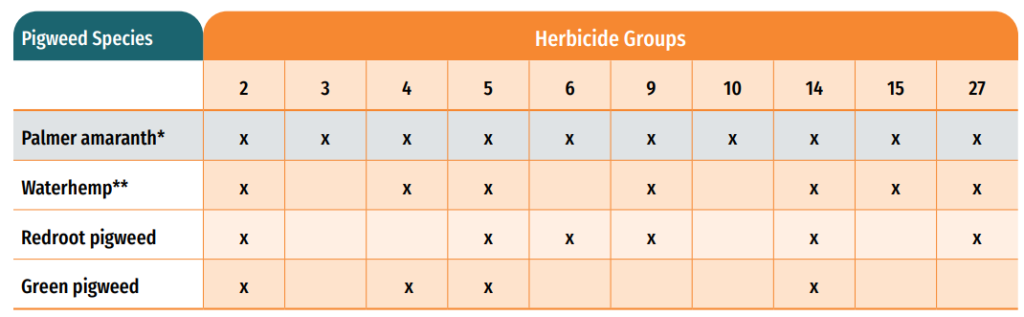
It is one of the most widespread and economically damaging agronomic weeds in the Southeastern U.S. and has been shown to reduce soybean and corn yields by 79% and 91%, respectively. Not only is Palmer amaranth more competitive than other amaranth (pigweed) species, but it is also resistant to multiple herbicide modes of action (Groups 2, 3, 4, 5, 9, 10, 14, 15 and 27).

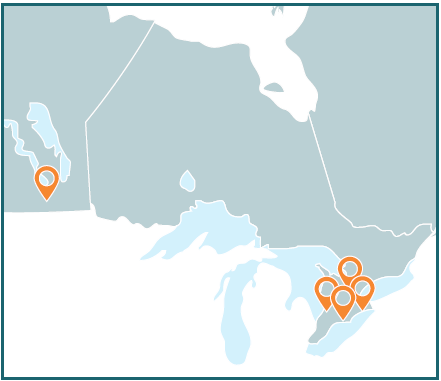
To date, there are no known established populations of Palmer amaranth in Canada; however it has spread to fields in Northeastern U.S. and other parts of the world from its native origin of Southwestern U.S. and Mexico. The potential range of Palmer amaranth includes southern to central portions of most provinces in Canada. There have been a few Palmer amaranth plants detected in Ontario and Manitoba over the years, all of which have been eradicated.

Palmer amaranth could enter Canada unintentionally as a contaminant of seed, grain, hay, livestock feed, bird feed, horticultural propagules, soil, vehicles and used farm equipment. It grows in crop fields, pastures, gardens, roadsides and a variety of disturbed habitats, and is an aggressive competitor with up to 7 cm of growth per day.

Photo credit: Rebekah D. Wallace

DETECTIONS IN CANADA

HOW CAN A GROWER HELP?

In order to prevent establishment, it is critical for growers to be on the lookout for Palmer amaranth. The first step is identification. Differentiating between pigweed species can be a challenge, so here are some visuals of key features to easily spot Palmer amaranth in your field.

IDENTIFICATION

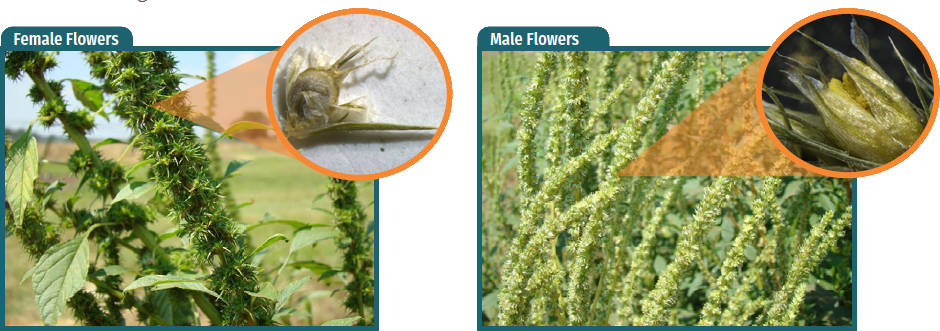
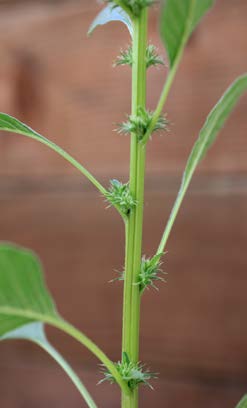
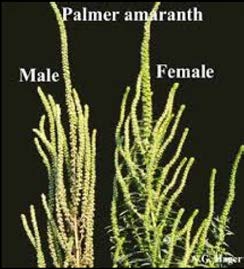
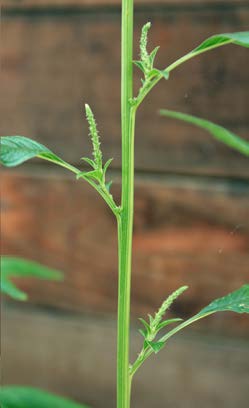
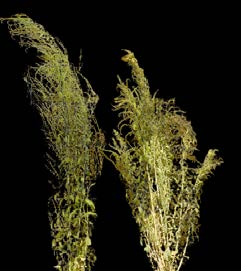
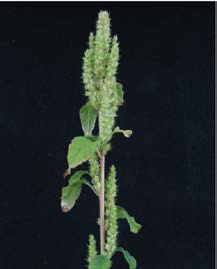
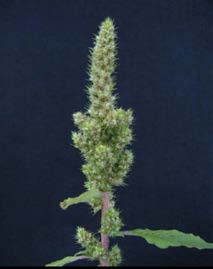
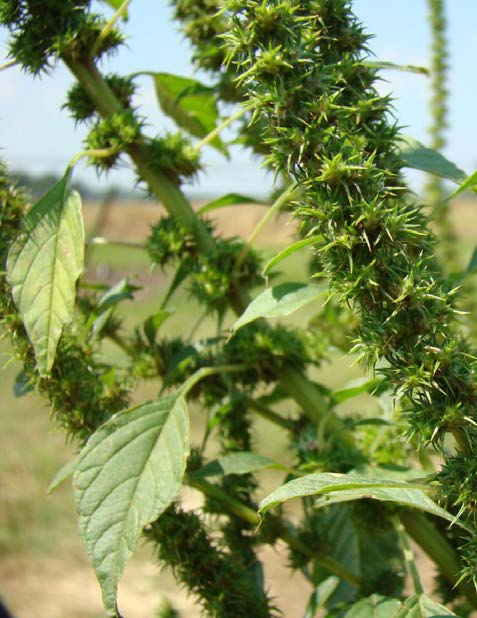
Palmer amaranth, like waterhemp, has female and male flowers on separate plants. Female flowers of Palmer amaranth have prickly bracts, while male flowers do not. Seed heads are 15 to 60 cm in length.

Photo credits: Andréanne Charron, Rebekah D. Wallace

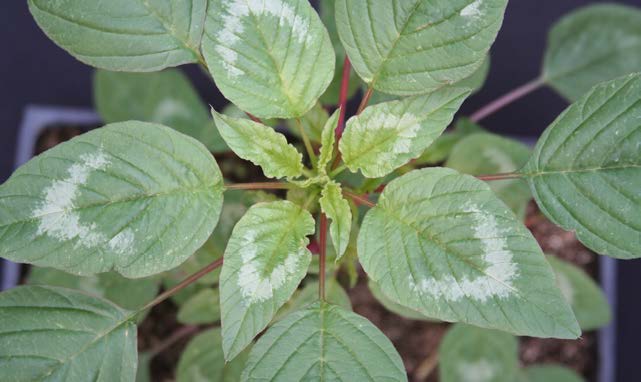
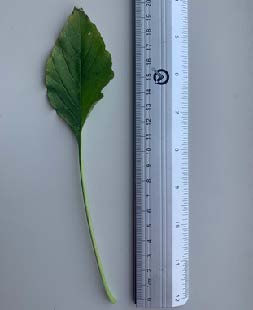
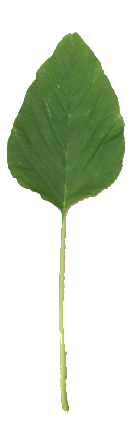
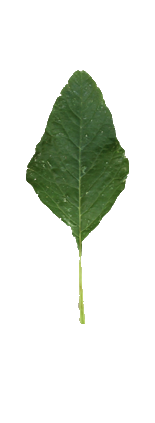
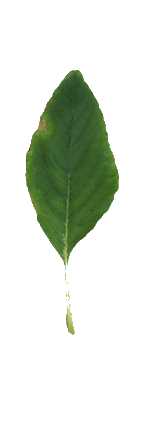
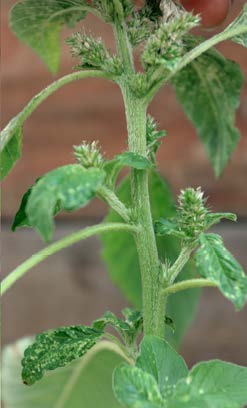
The most common characteristic to identify Palmer amaranth is the petiole (a stalk that attaches the leaf to the plant stem) which is usually longer than the leaf blade. Sometimes leaves will also have a “V” mark or dark red/purple patch (watermark) on the leaf blade. It is important to note that other pigweeds can sometimes also have this mark.

Sometimes Palmer amaranth leaves can be identified by a “V” mark or dark red/purple patch (watermark). Photo credit: Travis Legleiter and Bill Johnson
The petiole of a Palmer amaranth plant is usually longer than the leaf blade. Photo credit: Mike Cowbrough

KEY DISTINGUISHING FEATURES

Palmer amaranth

Photo credit: C. Shropshire

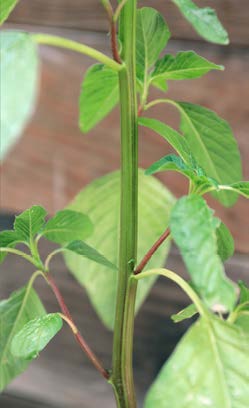
  • Hairless
  • Broad ovate shape
  • No waxy sheen
  • Petiole longer than leaf blade

Hairless

Photo credit: C. Shropshire
Photo credit: Peter Smith

  • Female and male flowers on separate plants
  • Spiny bracts on female flowers

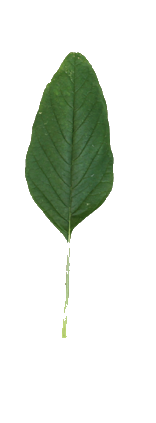
Waterhemp

Photo credit: C. Shropshire

  • Hairless
  • Narrow lanceolate shape
  • Waxy sheen
  • Petiole shorter
    than leaf blade

Hairless

Photo credit: C. Shropshire
Photo credit: Sandra Flores-Mejia (CÉROM)

  • Female and male flowers on separate plants
  • No spiny bracts

Green pigweed

Photo credit: C. Shropshire

  •  Few small fine hairs
  • Ovate shape
  • Waxy sheen
  • Petiole shorter than leaf blade

Small fine hairs

Photo credit: C. Shropshire
Photo credit: Peter Smith

  • Female and male flowers on the same plant
  • No spiny bracts

Redroot pigweed

Photo credit: C. Shropshire

  •  Hairs visible to the naked eye
  • Ovate shape
  • Rough surface
  • Petiole shorter than leaf blade

Small fine hairs

Photo credit: C. Shropshire
Photo credit: Peter Smith

  • Female and male flowers on the same plant
  • Bristly but no spiny bracts

HERBICIDE RESISTANCE PROFILE OF AMARANTH SPECIES

Reported herbicide resistance for amaranth species in the world

 (Current as of August 2024)

* Multiple resistant populations with groups: 2, 4, 5, 9, 14 and 27.

** Multiple resistance populations with groups: 2, 5, 9, 14 and 27

The pigweed species currently established in Canada have confirmed resistance to 6 herbicide groups (2, 5, 6, 9, 14, 27) – this is the most of any weed.

WHAT TO DO IF YOU FIND OR SUSPECT PALMER AMARANTH

Distinguishing Palmer amaranth from other pigweed species can be challenging, making early detection difficult, but crucial for minimizing its potential impact in Canada.

If a Palmer amaranth plant is suspected, follow these tips:

1 Use the Palmer amaranth key features and identification information in this fact sheet to help identify the weed.

2 It is highly recommended to have a laboratory confirmation of species identity.

If you suspect you have found Palmer amaranth, contact both a provincial representative and the CFIA. Contacts to report suspected sightings are available here or by scanning the QR code:

The Canadian Plant Health Council’s (CPHC) Weeds Surveillance Community of Practice (WSCP) has focused on developing tools and resources to coordinate and facilitate national surveillance of Amaranthus species in Canada, including Palmer amaranth. Their harmonized protocol for the surveillance of amaranth species includes a protocol for scouting, tools for identification, and resources for testing for herbicide resistance by province.

View the CPHC Weeds Surveillance Community of Practice harmonized protocol for surveillance here or by scanning the QR code:

Manage Resistance Now

This information is brought to you by CropLife Canada and Canadian Plant Health Council

References

Canadian Plant Health Council. Palmer amaranth. Pest ID card. https://www.agrireseau.net/documents/110749/carte-de-phytoravageur-amaranthus-palmeri

CFIA. 2022. Weed Risk Assessment of Amaranthus palmeri S. Watson. Canadian Food Inspection Agency, Ottawa, ON. 43 pp.

Cowbrough, M. 2023. Palmer amaranth found in Ontario. https://fieldcropnews.com/2023/08/palmer-amaranth-found-in-ontario/

Duval, B. 2024. Votre trousse « Résistance des mauvaises herbes » pour 2024; https://www.agrireseau.net/grandescultures/blogue/100418/

Flores-Mejia, S.; Obeid, K.; Schnell, J., Sharpe, S.; Simard, M.-J. and Picard, A. 2023. Harmonized protocol for the surveillance of amaranth species. Weeds Surveillance Community of Practice (WSCP) of the Canadian Plant Health Council’s (CPHC). https://www.agrireseau.net/documents/109396/protocole-harmonise-de-surveillance-de-l_amarante-tuberculee-en-anglais?a=1&do=1499

Heap, I. 2023. The international survey of herbicide resistant weeds. Weed Science Society of America. [Online] Available: www.weedscience.org [20 October 2023].

LEDP-Malherbologie and Cuerrier, M.-É. 2023. Amarante de Palmer découverte en Ontario. Réseau d’avertissements phytosanitaires (RAP) – Malherbologie. Bulletin d’information. No. 2, 1er septembre 2023 [Online] Available: https://www.agrireseau.net/documents/111650/

Page, E. R., Nurse, R. E., Meloche, S., Bosveld, K., Grainger, C., Obeid, K., Filotas, M., Simard, M. J. and Laforest, M. 2021. Import of Palmer amaranth (Amaranthus palmeri S. Wats.) seed with sweet potato (Ipomoea batatas (L.) Lam) slips. Canadian Journal of Plant Science 101(5):774-778.

Ward, S. M., Webster, T. M. and Steckel, L. E. 2013. Palmer amaranth (Amaranthus palmeri): a review. Weed Technology 27: 12-27.

Print The Handout