Waterhemp Identification and Management

WHY IT’S IMPORTANT

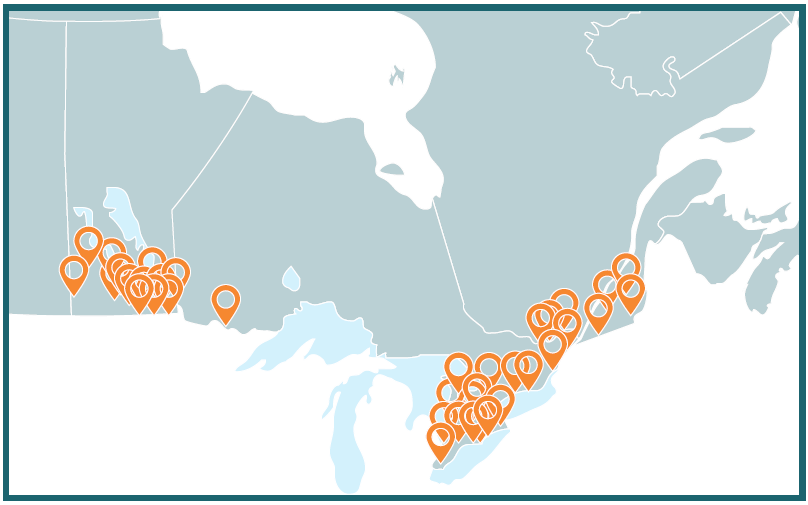
Waterhemp (Amaranthus tuberculatus) is a non-native annual weed rapidly spreading across Canada. Currently found in Ontario, Quebec, and Manitoba, waterhemp prefers moist or wet conditions with full or partial sun, similar to many economically important crops.

DETECTIONS IN CANADA

DETECTIONS IN CANADA

WHY WATERHEMP IS A PROBLEM

  • Resistant to herbicides – Most waterhemp in Canada is resistant to at least one herbicide mode of action, with multiple resistance common.
  • Becomes resistant quickly – Waterhemp can evolve resistance in three cycles of selection (by the same herbicide(s)) due to its extensive genetic diversity.
  • Has a large emergence window – From spring to early autumn
  • Fast growth – 2.5 – 4 cms per day

  • Produces millions of long-lasting seeds, – Can produce up to 4.8 million seeds per female (300,000 – 1 million under the crop canopy), rapidly increasing the soil seed bank. Seeds become viable as soon as seven days after pollination and can persist in the soil for about eight years.
  • Spreads easily – Seeds are small (~1 mm), facilitating spread through the movement of plants, farm equipment, migratory animals and birds.

DEVELOPING HERBICIDE RESISTANCE

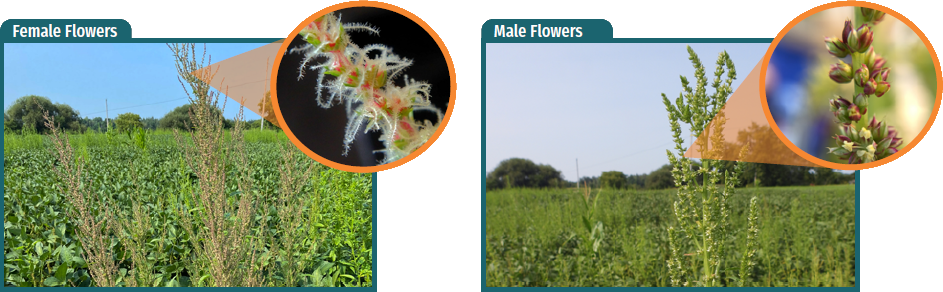
Waterhemp is dioecious (separate male and female plants), which contributes to high genetic diversity and rapid herbicide resistance development. As a member of the Amaranthus (pigweed) family, it resembles related species, including redroot pigweed, green pigweed and Palmer amaranth and may hybridize with other pigweeds. Hybrid pigweeds may inherit herbicide resistance from one or both parents and have mixed morphology making it even more difficult to identify species.

See the Palmer amaranth fact sheet for identification help.

Most waterhemp found in Canada is resistant to two or more herbicide modes of action – and up to five modes of action in Ontario and Quebec.
IDENTIFICATION

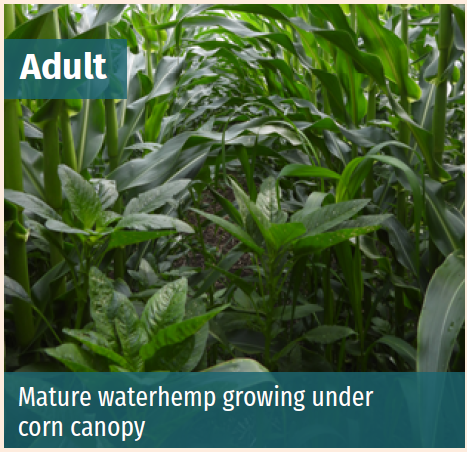
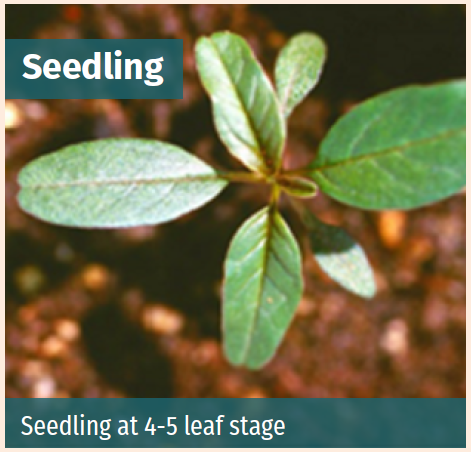
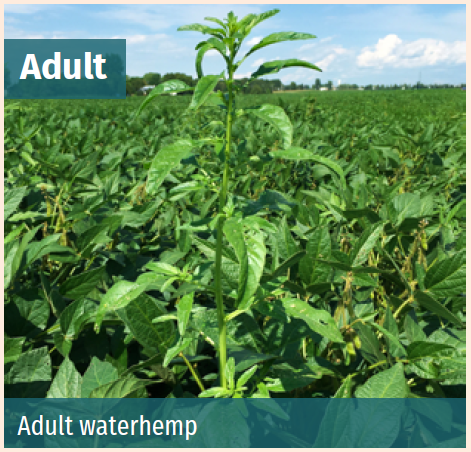
Waterhemp seedlings have egg-shaped cotyledons, and narrow ovate leaves with notched tips and a waxy sheen (see image of waterhemp seedling at 4-5 leaf stage). The adult plants grow to two metres tall and have hairless stems. Waterhemp plants that emerge late in the season can be very short, remain under canopy and still produce viable seeds.

KNOW HOW TO IDENTIFY WATERHEMP

Early and accurate identification of waterhemp is crucial for minimizing its impact in the field.

Photo credit: Sandra Flores‑Mejia

Scout for waterhemp early in the season (at or before crop emergence) for in-season control and again in August or September to identify and to prevent seed production. Complement field scouting with in-season lab testing for herbicide resistance to confidently select appropriate management strategies.

The Canadian Plant Health Council’s (CPHC) Weeds Surveillance Community of Practice has developed national tools and protocols for scouting, identifying and resistance testing Amaranthus species in Canada, including waterhemp.


View the CPHC Weeds Surveillance Community of Practice harmonized protocol for surveillance here or by scanning the QR code:
 

BEST PRACTICES TO MANAGE HERBICIDE-RESISTANT WATERHEMP

1 BIOSECURITY

Waterhemp is not yet widely established in Canada. To prevent its spread, adopt biosecurity measures like cleaning equipment between fields and harvesting fields with escapes last.

2 DIVERSE CROP ROTATIONS

Rotate crops to complement other control methods to manage waterhemp. For example, wheat offers early-season soil coverage, while corn and soybeans allow for cultivation between rows. Corn also competes well with waterhemp due to its height and late-season soil coverage.

3 CROP CANOPY CLOSURE

Closing the crop canopy by implementing narrow row spacing, inter-row cultivation, and increased seeding rates boosts crop competitiveness and reduces waterhemp germination.

4 COVER CROPS

Fall-seeded cover crops like cereal rye can supress early-season waterhemp and reduce waterhemp-dominant seedbanks. Crimping cereal rye before planting soybeans also reduces waterhemp size.

5 TILLAGE

Deep tillage can reduce waterhemp populations by burying the seeds too deep to emerge, but it can lead to slightly extended seed longevity. Conversely, no-till systems result in higher waterhemp emergence, but with shorter seed longevity.

6 PREVENT PLANTS FROM SETTING SEEDS

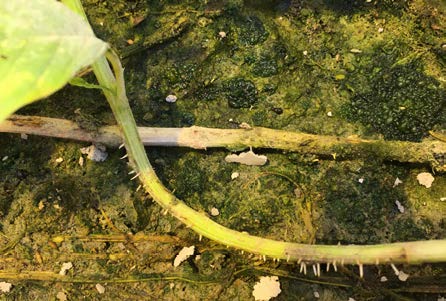
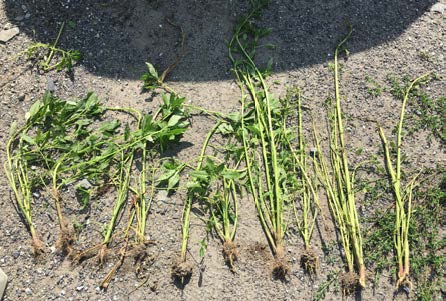
It is important to hand-weed and dispose of weed escapees because plants that are left on the soil can develop adventitious roots and continue to produce a small number of seeds.

7 RESIDUAL HERBICIDES

Applying full-rate soil residual herbicides before or after planting, can help reduce early waterhemp populations by providing longer lasting control, reducing early-season competition. Relying solely on post-emergence herbicides can increase the risk of developing herbicide resistance.

8 SCOUT FIELDS

Scout fields 7-15 days after postemergence herbicide applications to evaluate waterhemp control. Continue scouting throughout the season to monitor for new plants.

9 ROTATE HERBICIDE GROUP

Consider the herbicide-resistance profile of the waterhemp when choosing the herbicide program, and make sure to rotate herbicide groups to prevent resistance.

Hand-weeded waterhemp plants start straightening up to the sun (first image) and newly formed adventitious roots from not being removed from soil (second image).

WHAT TO DO IF YOU SUSPECT OR IDENTIFY HERBICIDE-RESISTANT WATERHEMP

Waterhemp is both hardy and pervasive, with populations from the U.S. and Eastern Canada steadily moving north and west. Follow these best practices and action plans to help manage this invasive weed:

  • Be vigilant – Learn to recognize waterhemp’s key traits for accurate field identification.
  • Proactively follow best practices in biosecurity – Thoroughly clean tools and equipment between sites and follow other biosecurity measures to prevent weed spread.
  • Start early – Small waterhemp populations will not reduce crop yield, tempting to delay control measures – however, this weed will quickly become problematic and expensive to control within 1 to 2 years.
  • Use multiple control measures – Due to waterhemp’s ability to quickly develop herbicide resistance, diversifying BMPs and control tools is recommended.

  • Scout, and scout again – Survey neighbouring fields and areas for waterhemp, including field edges and infestation sites for several seasons to monitor recurrence.

Before choosing a herbicide program, make sure to know the resistance profile of the population you want to manage.

Refer to this factsheet for more herbicide resistance BMPs that apply to all weeds.

FOLLOW THESE THREE STEPS IF YOU THINK YOU HAVE WATERHEMP IN YOUR FIELD:

  1. Test for HR profiles – Resistance is diverse in waterhemp and it’s critical to find out which herbicide groups will be effective on the detected populations. The only way to know your best control option is diagnosis from a lab test. Ask the lab what kind of samples they need to run these tests – your agronomist or agri-retail may have a suggested lab contact. Take the required samples and get them tested.
  2. Scout early – Survey surrounding areas for additional infestation sites and follow biosecurity guidelines to prevent contamination of other fields.
  3. Monitor fields – To ensure proper management and, as necessary, treat the infested areas to avoid weed establishment.

Manage Resistance Now

This information is brought to you by CropLife Canada and Canadian Plant Health Council.

Print The Handout